
ep. 96. How a Creative-Technologist-Turned-Product-Leader Meets People Where They Are with AI
10 min read


George Goodman considers himself a creative technologist.
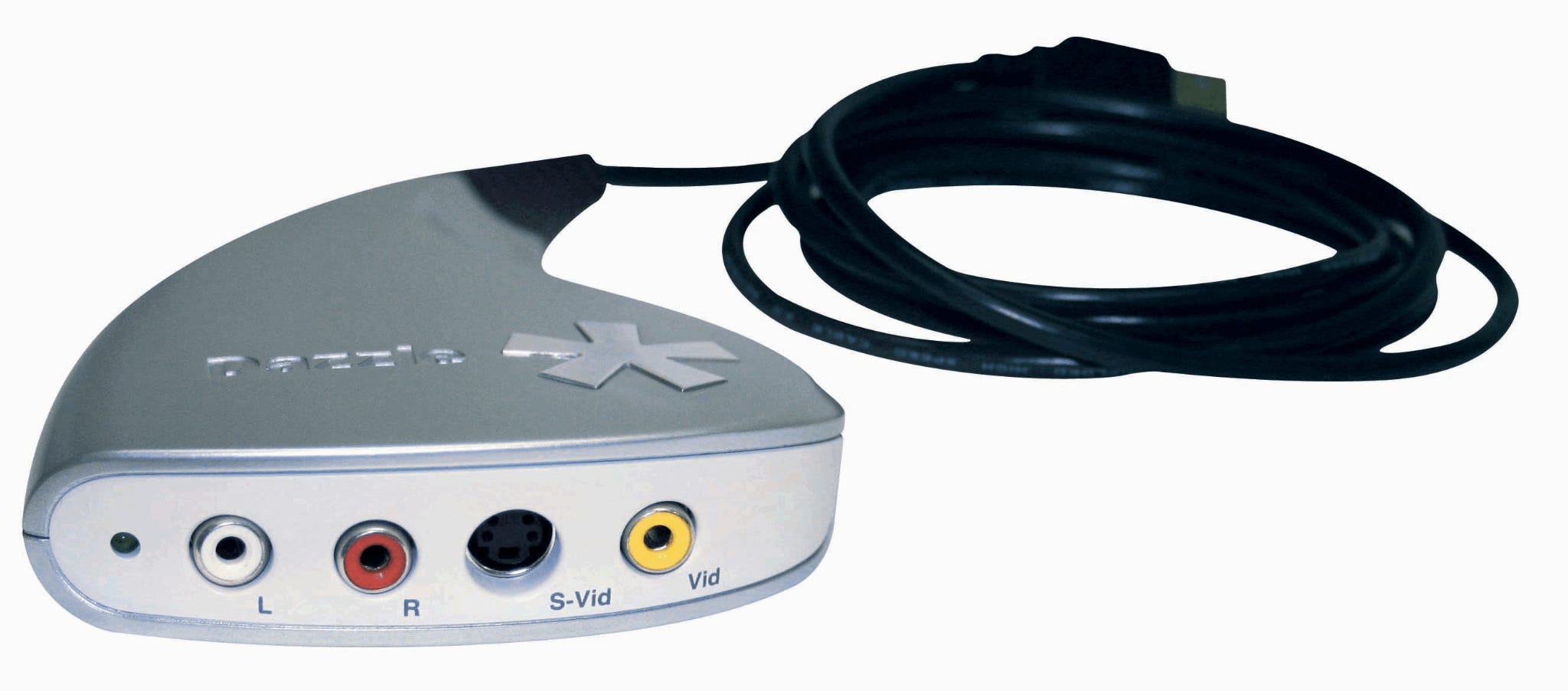
He’s been creating at the intersection of media production and technical problem-solving since childhood. Growing up in the home PC era with a fascination with video production, George fondly recalled using a Dazzle to digitize analog video, often to terrible quality results.

When a new creative software tool came out, be it for video, photo, music, or graphics, George was using it before long.
Between navigating constant PC crashes and teaching himself different multimedia software, he built a foundation of technical resilience, fuelled by curiosity about the mechanics underlying the tools he used.
After going on to study film at Georgia State and working in TV production at Turner Broadcasting, George took a video production role at Vistaprint. It was there, while working on the website builder, Webs, that he realized he could have more of an impact on the business in a product role than as a media creator. That insight led him to transition into his first PM role.
From Video Production to Product Management
George noticed that product management asked for something he loved about video production: integrating a range of specialities into a cohesive whole.
Video production involves audio, graphics, lighting, cameras, editing, and more. Product management involves data, customer obsession, marketing, and engineering, to name a few.
In both, he loved that each area had its own challenges to learn, and that his role was bringing them all into something cohesive.
In 2021, George moved to Adobe as a senior product manager. He initially worked on application performance before successfully pitching a move into something more aligned with his creative technologist expertise: generative imaging.
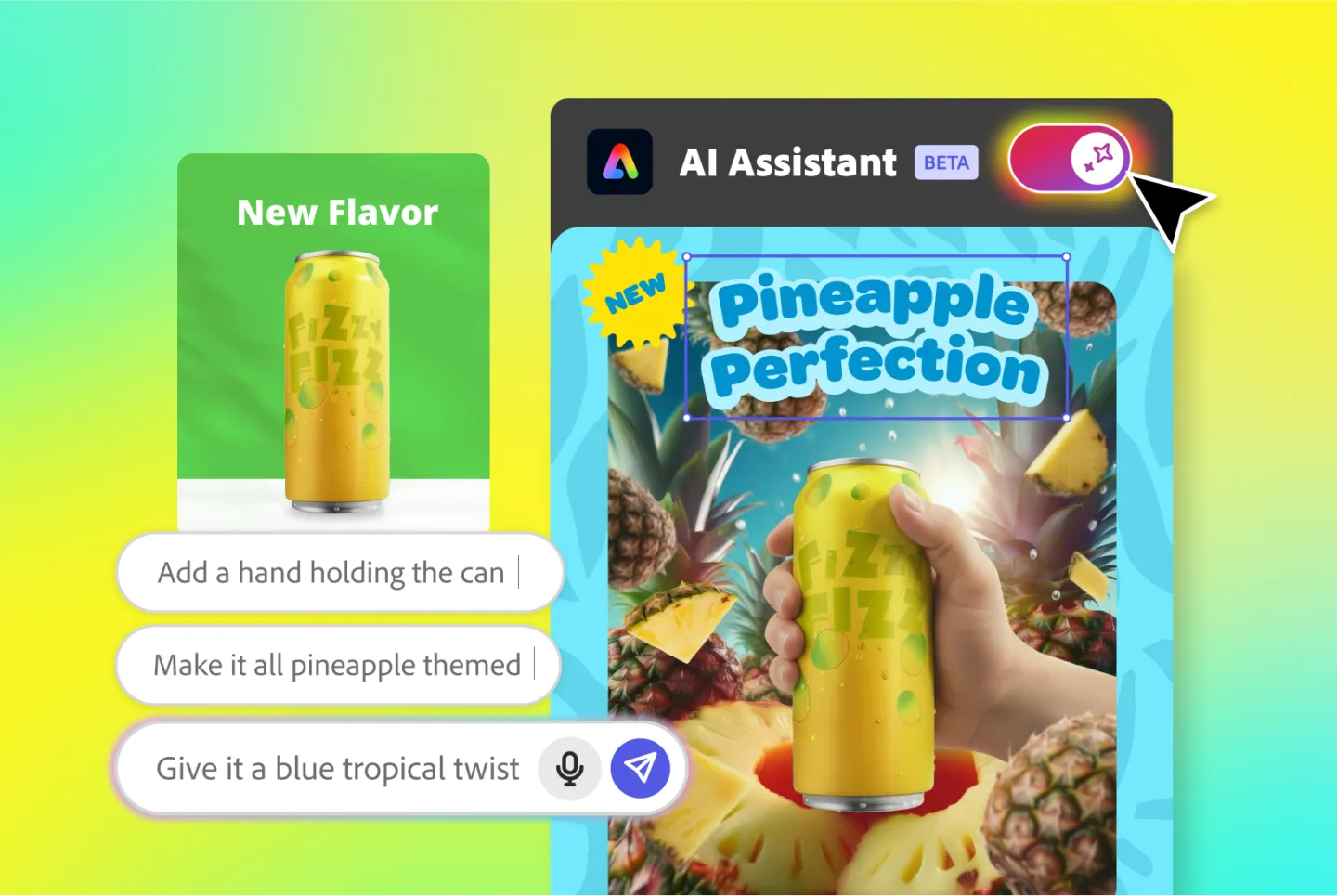
He went on to lead the development of the Adobe Express AI Assistant, which launched at Adobe MAX, the company’s annual conference, in 2025. Today, George serves as Director of Product for Agentic and Generative AI.
Closing the Intent Articulation Gap
When George started pitching natural-language design at Adobe, the common belief was that users couldn’t prompt effectively.
“That’s not the problem. People know how to prompt; we don’t know how to respond. Your whole job is figuring out from the words they use, words that aren’t technically design-oriented, what they actually mean.”
The framing was informed by his own experience as a creative professional.
“If you have a background in design, you know that people usually don’t know how to tell you what they want. Your job is figuring out what clients mean from what they say. You do that with references in all kinds of ways.”
He treated the AI assistant the same way. The product’s job was to interpret what people said and fill in the gaps, rather than demand more precise prompts.
Putting User Control First (Before the Tools Could)
Even in its earlier days, Adobe Express AI Assistant used agentic LLM capabilities to create and edit layered designs. Users could design via prompt, then manually edit them with traditional WYSIWYG tools.
This is noteworthy because George and team built the AI Assistant during a time when diffusion models had significant limitations for design work.
First, they couldn’t handle text. Glyphs were frequently broken, which instantly made the designs unusable. Second, users couldn’t make targeted edits. If they wanted to change one thing about their design, the entire design would also be altered.
George and team were confident that the tech would improve over time. They held fast to their belief that giving people manual control of precise layers but still offering the power of prompting was the best of both worlds.
Diffusion has since closed most of those original gaps. For users who just need a clean single-page design, modern diffusion is good enough; managing layers is more complexity than value for them. For brand-obsessed users and anyone doing heavy text editing, layered control still earns its complexity.
A hard product challenge remains: most users who’d benefit from a diffusion workflow today still say they need layers, because they haven’t had the “aha” moment of how good diffusion has gotten.
George frames the core product job as matching the right users with the right technology for their needs.
“Sometimes that means showing them something new, such as diffusion model workflows, while still giving them an escape hatch to layered workflows. Sometimes it means starting them in layered space because their use case is something outside what diffusion models do well today.”
Mapping the Prompting Landscape
George recognized that prompts vary in how much interpretation they require. He broke the prompting landscape into a two-vector framework: ambiguity and scope.
The ambiguity vector tracks the request’s intent, moving from objective tasks (e.g., “change the headline color to red #bc3503”) to increasingly subjective ones (e.g., “make it feel more winter-y”) and finally to the highly abstract “make it better” request.
The scope vector measures the scale of the change, ranging from the asset level, such as targeting a specific text box or image, to the full design level, where a change affects the overall composition, to multiple designs and design types, such as a campaign. For this last one, think of someone using a single prompt to generate static social media posts, a video, and branded emails.
They anchored their initial development in the quadrant of objective, asset-level changes where the technology was most deterministic and reliable. From that baseline, they systematically built upward toward the more ambiguous, high-scope requests that provide the most value to users.
“The whole thing we’re trying to do is give people without a design background simple ways to get the results they need. You’re only meeting them where they are once you can allow them to be subjective. You interpret that for them.”
This approach creates a central tension in AI product development: the “aha moment” for most customers lives in the subjective, full-design quadrant where they can provide vague instructions and have the AI interpret their meaning.
That’s also where the models are most prone to failure. Addressing those failures requires a “whack-a-mole” approach to engineering, constantly fixing routing issues where a model might take a wrong turn.
That’s why George’s team started where the model can deliver with high confidence while maintaining a roadmap that expands into the ambiguity that’s most important to users.
A Two-Tiered Eval System
The Adobe Express AI Assistant eval system maps directly onto the ambiguity and scope vectors. It runs on two tiers:
Tier 1: Objective Payload Evals
For objective requests, evals focus on the action payload: the underlying JSON instructions that the LLM generates for the software. For instance, for a specific prompt like “change opacity to 90%,” the system verifies that the LLM returned the exact technical command required to execute that edit.
Because there’s a fixed, “correct” response to this prompt, the evaluation process is highly automatable, enabling the team to run thousands of pass/fail tests at scale to ensure the model is accurately selecting the right functions.
Tier 2: Subjective Visual Evals
Outputs that require aesthetic judgment still require humans providing a visual assessment of the final outcome. These evaluations address nuanced design questions, such as ‘Did the chosen red color coordinate effectively with the rest of the existing layout?’, ‘Did a generative image edit achieve identity preservation?’ and ‘Did the model correctly pick up on reference signals and images from other sources?’
Subjective ratings present an operational challenge:
“You can’t have your team rating thousands of evals every day, but you also need to understand how the system is working and continue improving it. In a world where every deployment can break your system, how do you evaluate subjective outcomes at scale?
The answer becomes a combination of manual and AI-based review. At the highest level, manual reviews and annotations become an input into training AI. Over time, AI models get better at matching human feedback and become more reliable and faster indicators of changes in the system.”
George always reminds the PMs on his team, “Evals are the new PRD. They express how the system should work and give you feedback as to whether or not it does. Just because AI can scale eval reviews doesn’t mean you don’t have to look at them.”
“Evals are the new PRD.”
Building for a Moving Frontier
The balance between what is machine-rateable and human-rateable is shifting as model reasoning improves.
George noted how each major model release prompts his team to ask which layers of internal scaffolding they can now peel away. He compares the work of building on a moving frontier to a previous experience, creating a website builder:
“We chose to adopt React as the framework before it was mature. You end up creating bespoke solutions for problems the framework eventually solves natively.
You look forward a year or two and see you have a ton of tech debt because you built out solutions that are now established patterns. As you have more capable models, you should be peeling those away.”
We have already seen a few cycles of evolution and capability jumps. George notes that these leaps make you start to question if the problems you’re solving are durable or if they’re bandaids until the next model comes out. He adds, “The world moves so fast now that you have to be strategic in what and how you choose to build.”
Zooming out further, George only sees the models getting better. As a result, frontier models will start feeling like using a firehose to put out a small camp fire. That extra force also comes with monetary cost, and potentially, a precision cost, because more focused models can be more reliable for some tasks.
“There’s business in creating small focused models that are efficient at high value and high volume tasks. This reduces cost, increases speed, and can provide higher quality, more controlled outputs.”
From Home Depot to Apple Store
George uses a retail metaphor to describe the broader transition AI is enabling in software.
Currently, creative tools function like Home Depot: the inventory is all there on the shelves, but you have to find the parts and assemble them yourself.
What most people actually need is an experience more like the Apple Store, where a concierge greets you at the door and walks you through the process.
“You couldn’t have that level of service at scale in software. Now AI is the fundamental change giving you that. All we’re transitioning to now is adding the service layer on top of Home Depot.”
This reframing preserves the Home Depot “inventory” for power users who still need direct control over layers and hex codes, but it provides a necessary service layer for everyone else.

This approach informs a core strategy behind Adobe Express: the AI functions as a service layer, a concierge-style Apple Store experience, while the human directs the system with their intent.
Small Teams, Expanded Ownership
George’s view on product organization has evolved as AI tech has advanced.
“I believe even more in small, powerful teams because the scale of what they can accomplish has grown so much. A person can now write so much code in a day that their PR can hit a dozen code owners in a scaled org.
Now, the higher level question becomes: how do you keep the right quality checks and balances at scale when code volume and velocity is so high? That’s a hard problem when you can’t yet trust AI to have all the context to be the code author and reviewer.”
His operating philosophy is: “bank individuals.”
Once George finds talent, he provides them with decision autonomy and uses his leadership position to quickly clear blockers.
For junior product managers, George’s advice is to become AI-native immediately.
This means vibe-coding on weekends, building things agentically, knowing the latest models and hardware, training your own models, and having opinions on the tools you’ve used.
At the same time, it’s having PM fundamentals of understanding who you’re serving, shipping and iterating based on data and feedback, and cultivating taste (something increasingly important as creation becomes more democratized).
The AI Hype Check
I ask every practitioner I interview the same question: is AI overhyped or underhyped?
George’s answer: it’s appropriately hyped for what it can actually do.
“The scaling is real. It’s going as fast as it looks like it’s going. Within software, capabilities are appropriately hyped.”
The exception is robotics. Physical AI runs into regulation and the risk of human injury. Those are the same constraints slowing self-driving cars.
George anticipates that rising AI capabilities will provoke its own pushback, a renewed appreciation for outputs where being human is the point, like live music, handmade crafts, and paintings.
“I hope there’s going to be a renaissance of people appreciating more analog and human connections. Hopefully all the economic boring stuff gets automated, and empathy, expression, and love come to the forefront.”
This interview has been edited for length and clarity. Opinions expressed are solely George’s own and do not necessarily reflect those of his employer.
Three Things to Try This Week
Building on George’s practice, three takeaways for product practitioners:
Meet people where they are. It’s the product team’s job to close the intent articulation gap. Match the product to how users express what they want, instead of asking them to phrase it your way.
Anchor in objective success, then scale into ambiguity. Plot user requests on two axes: ambiguity (objective to subjective) and scope (asset to full project). Start delivering in the most objective, smallest-scope corner, where the model is most reliable. Most users default to the opposite corner (“make it better”). Your roadmap should be expanding toward where they live.
Decide where your product is Home Depot vs the Apple Store. Map the points where users have to find and assemble things themselves. Those are the places a service layer can meet them. Offer power users direct access to the inventory; everyone else gets a concierge.
Know a practitioner navigating AI in their work who should be featured here? Reach out to hello@sendfull.com.
⏪ Recent Episodes
ep. 95. How an Interdisciplinary PM Owns the Output of AI
ep. 94. How a Leading Health Tech UX Researcher Decides What to Delegate to AI
If you like these episodes, you’ll love my book. What Your Machines Should Do is coming this year with Rosenfeld Media. 📣 Sign up to be the first to know about new book releases, sales, and events.
📖 Good Reads
The Futility of Predicting AI Job Exposure (Benedict Evans): Evans argues AI’s job impact can’t be quantified, because technology reshapes roles and business models rather than just automating tasks. Past automation often triggered Jevons Paradox, where cheaper processes unlock new demand.
Phone Bans are Spreading Across the US Workplace (The Independent): More US employers are using phone restrictions and lockable pouches to cut digital distraction, protect sensitive data, and encourage face-to-face collaboration.
A Review of Experiments with Synthetic Users (Jim Lewis & Jeff Sauro): Synthetic users promise cheaper, more scalable research, but peer-reviewed studies show they often fail to match the depth and variance of real participants. They can be useful for querying stable existing datasets, but they’re too imprecise to reliably replace humans in high-stakes decisions.
That’s a wrap 🌯 . More on UX, HCI, and strategy from Sendfull in two weeks!