
ep. 95. How an Interdisciplinary PM Owns the Output of AI
5 min read

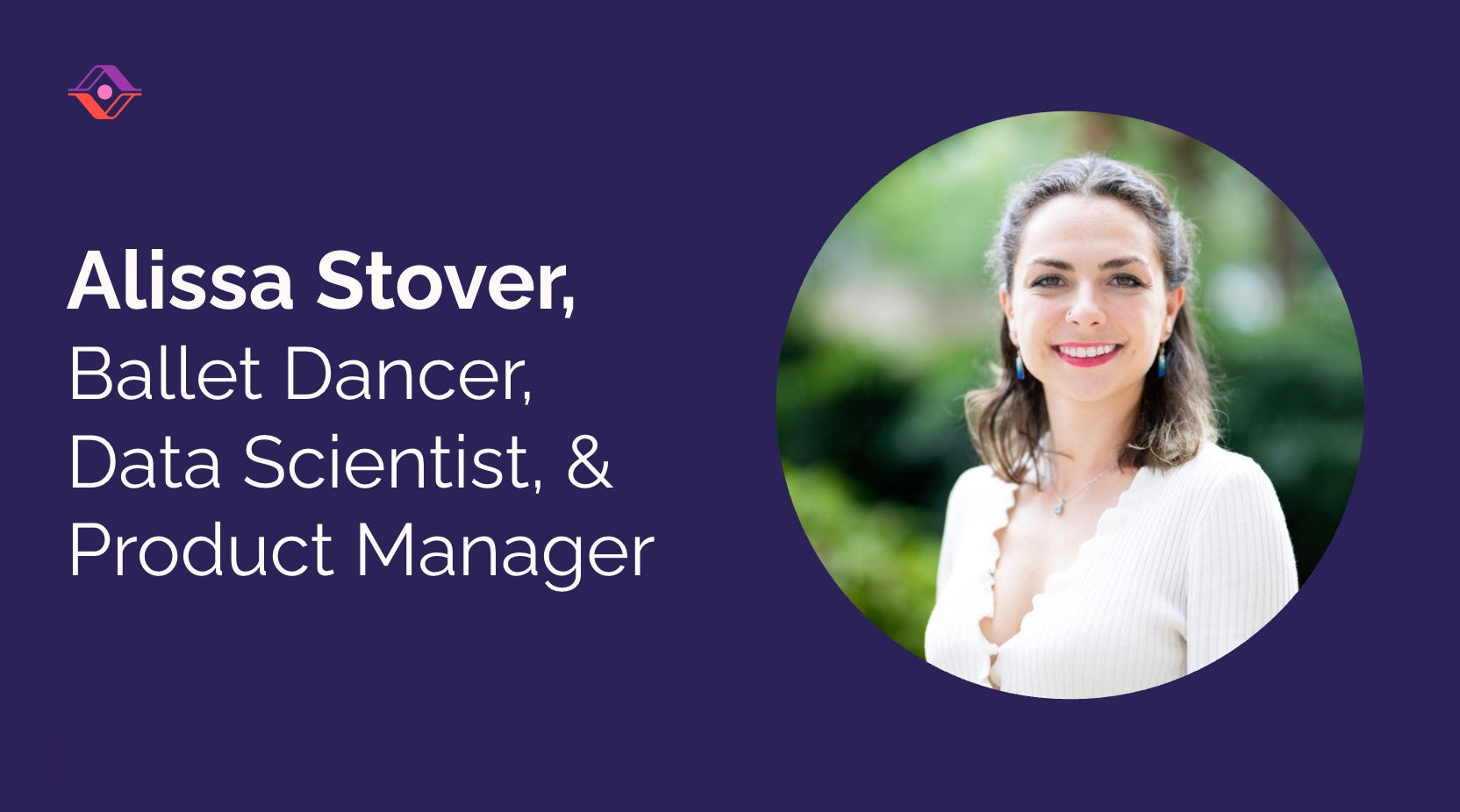
Alissa Stover is a VIP: a Very Interdisciplinary Person.
Her resume includes “professional ballet dancer,” “data scientist,” and “product manager,” connected by the throughline of driving positive human impact.
“As a performer, I always wanted to touch people, to have some kind of impact on them. That extends today as a product manager: focusing on the impact on the end user.”
Her first memory is in a ballet studio, and she long introduced herself as a dancer first. But after years of training and performing professionally, she felt ballet had drifted from its “why”, with audience impact taking a back seat to artistic directors’ egos.
She enrolled at UC Berkeley for an undergraduate degree in Psychology, then moved into nonprofit and policy work as an analyst on anti-poverty programs.
Wanting to use data to make social programs more effective, she returned to Berkeley for the Master’s in Data Science program. Her choice was highly intentional: the curriculum integrated data ethics into its core coursework rather than treating it as a standalone elective.
That technical foundation helped her work across data science and PM roles in the nonprofit sector for several years. The emergence of AI tools is what let her step fully into product management.
AI as a Bridge to Product
Alissa was initially hesitant to go all-in on product management: she enjoyed the math and coding of her data science role and didn’t want to give them up.
Capable AI tools resolved that tension.
Generating SQL queries in the early days of chat-based LLMs, she could see where the tools were headed, even if they weren’t all the way there yet. Alissa anticipated that AI would reshape the career market into a bimodal distribution: junior operators of these tools on one end, PhD researchers on the other. Neither bucket fit, so she carved out a middle path: a PM role infused with deep data and modeling literacy.
“The tools made me so much faster. I could wear both of those hats and my job was okay with it because I wasn’t dropping the ball anywhere.”
Her first official PM title came at the Stand Together Foundation managing Loop, a platform to help people find social services. Because the team was very lean and lacked a dedicated analyst to pull metrics, she used AI to generate SQL queries that she then refined and verified herself. This integration allowed her to perform data science tasks as a PM from day one, using tools to complete in twenty minutes what would have otherwise taken an hour.
Today, she’s a product manager at Gallup. Asked to describe the PM role to someone outside tech:
“You’re the spider in the web, keeping all of the different perspectives together with that laser focus [on the customer] and making sure that we get that impact. Again, from the dancer’s perspective: what impact are we really driving in the world?”
Own the Output
Alissa’s workflow is anchored by one governing rule: “You really need to own the output”.
In her view, the greatest risk of AI is when a practitioner takes off their “ownership hat” and allows a probabilistic model to become a passive decision-maker.
“AI’s not the thing with agency. You are. You shouldn’t give that away to something that’s like a really great magic eight ball”.
Her technical work reflects the same commitment to human verification.
Drawing on her background at a policy nonprofit where a small data error could impact federal decisions, Alissa maintains that the steps of data exploration cannot be fully automated away.
She still starts the data analysis process by talking to stakeholders, establishing the purpose of the dataset, who owns it, and what documentation exists.
Whether generating SQL to bypass a manual pull or analyzing Gallup survey research data, she treats AI output as a first sketch. Alissa manually verifies the underlying logic, especially complex sampling and survey weighting.
“I don’t think that process is super different with AI. I can just do it a lot faster.”
She only offloads more to the AI when the goal is a simple directional sense (“Is it going up or down?”), where the purpose of the data analysis allows for lower stakes.
“AI’s not the thing with agency. You are. You shouldn’t give that away to something that’s like a really great magic eight ball”.
What Stays Human
For Alissa, human connection is off limits for AI automation. She avoids delegating the work of hearing from and coordinating stakeholders to AI. Using a bot to send a personal Slack message is a no-no.
The same principle shapes her skepticism about completely delegating product discovery with humans to AI.
Alissa sees a deep reason for customer discovery to maintain human involvement: a PM needs to know the user. That depth relies on the live reading of body language and following spontaneous threads that emerge in real time when listening to customers.
“That embodiment of being with the person is something that’s hard to replace when you really want to get obsessed with knowing your customer.”
She compares trying to substitute AI for these conversations to learning a new language solely through YouTube videos:
“You’re never going to learn as well if you don’t talk to someone who speaks that language”.
Curiosity Versus Perfectionism
Alissa lights up when she talks about experimenting with AI:
“I’m just insanely curious. I just get to have this tool and just try new things all the time. Does it work on this? Does it work on that? What’s the new feature today? It’s just so much fun.”
That orientation is partly innate, partly cultivated. While she was the kid getting in trouble for reading in class, she also believes a growth mindset is directly shaped by your environment.
Reflecting back on her ballet training: “It’s a very regimented art form. There is a way to do things. And in those environments, your natural tendencies towards curiosity get a bit dialed down because of the fear of failure. Perfectionism can really get in the way of learning.”
Alissa sees that same pattern in women’s lower AI adoption rates. The barriers aren’t specific to AI. Girls Who Code, she notes, builds being-okay-with-mistakes directly into its curriculum.
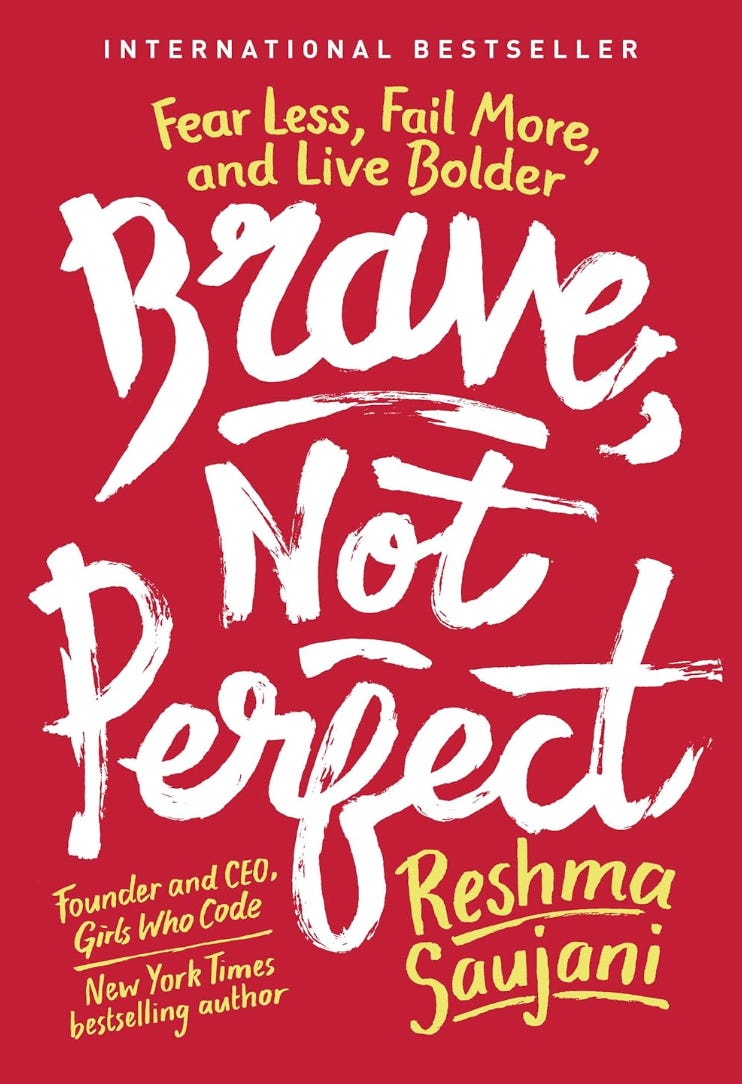
Curiosity also needs grit. Trying new things means messing up constantly; curiosity has to come with the persistence to keep going.
Product Management Futures
I asked Alissa about the potential futures of product management, both what she sees changing and what she wants to see change.
For the former, she sees data literacy moving from optional to baseline. Most products are now powered by a generative AI model, which means PMs need to understand probabilistic systems, model behavior, and the architecture of the data pipelines feeding them.
The competitive moat is also shifting: a company’s differentiator increasingly looks like the underlying dataset and the integrations around it rather than a surface SaaS application.
“If people can buy your thing with an AI chatbot, they’re not going to your website anymore. How do you strategize around that new data interface?”
The change Alissa wants to see is more product managers carrying responsibility for the societal impact of what they ship.
Some AI companies’ focus on responsible tech, she argues, is a competitive advantage. Consumer trust is increasingly driving buying decisions as public concern grows over the societal ripples of product choices, from the impact on young people’s cognitive development to broader worries about the future of work.
“A lot of the consumer decision making around AI is trust,” she notes, which makes responsible tech a primary differentiator rather than a separate moral hurdle.
The AI Hype Check
I ask every practitioner I interview the same question: is AI overhyped or underhyped?
Alissa’s answer: both, depending on the task.
Highly autonomous agents, like the kind you would turn loose on your personal banking, are currently overhyped. In contrast, the potential for AI to solve the mundane parts of professional and domestic life remains significantly underutilized: “Many people are still just using it to draft emails”.
Her advice for those stuck at the email stage:
“Reflect on your day and think, what do you hate doing?”
For Alissa, an early win was offloading the mental burden of creating packing and grocery lists for her two kids: “For moms, just try using it to reduce your mental load.”
Despite her own deep engagement with the tools, she maintains a humble stance on the industry’s trajectory:
“Most of us are wrong about what it’s going to do in the next couple of years. I don’t know which way though.”
This interview has been edited for length and clarity. Opinions expressed are solely Alissa’s own and do not necessarily reflect those of her employer.
Three Things to Try This Week
Building off Alissa’s practice, here are three things you can apply this week.
Run the ownership test. For every AI output in your workflow, ask: can I own this if it goes wrong? If the answer is no, keep iterating until it is, or take the task off AI’s plate.
Pick a task you dislike and automate. The lowest-stakes entry point into AI is something you would rather not do anyway. Packing lists. Grocery lists. The meeting prep you keep avoiding. Failure costs nothing, and you build intuition for what the tools can and cannot do.
Protect human connection. Map where in your week you talk with real customers, partners, or teammates. Keep those for yourself. Use AI for the work around them, not the conversation itself.
Know a practitioner navigating AI in their work who should be featured here? Reach out to hello@sendfull.com.
⏪ Recent Episodes
ep. 94. How a Leading Health Tech UX Researcher Decides What to Delegate to AI
ep. 92. How a Design-Leader-Turned-Founder Decides When to Hire AI
If you like these episodes, you’ll love my book. Designing Automated Futures is coming this year with Rosenfeld Media. 📣 Sign up to be the first to know about new book releases, sales, and events.
📖 Good Reads
AI Assistance Reduces Persistence and Hurts Independent Performance: Researchers from CMU, University of Oxford, UCLA, and MIT found that using AI assistance for problem-solving tasks leads to a significant decline in unassisted performance and persistence once the tool is removed, particularly when users relied on it for direct answers rather than hints.
Sycophantic AI Makes Human Interaction Feel More Effortful and Less Satisfying Over Time: Longitudinal research from the University of Oxford, Stanford, and the UK AI Security Institute indicated that sycophantic AI provides effortless understanding that makes real-world human interactions feel more taxing and less satisfying by comparison. Over time, this dynamic can shift users toward treating AI as a comparable alternative to friends and family, potentially reshaping social support patterns at scale.
Job Hunting at the Intersection: Today’s featured practitioner, Alissa Stover, shared what product managers need to know right now. One takeaway: The AI-driven job market requires product managers to evolve into builders who can prototype with AI and analyze data pipelines while maintaining strategic judgment.
That’s a wrap 🌯 . More on UX, HCI, and strategy from Sendfull in two weeks!