
ep. 59. 2024 Reflections and Takeaways, By Design
7 min read


I routinely ask my user experience design students to practice reflecting on their process to foster a growth mindset. As 2024 draws to a close, I’ll follow my own advice at the macro level, and reflect on my own practice over the past 12 months. I tie these reflections to five key design takeaways that I’ll be bringing with me into 2025.
A Year in Reflection
I’ll start by taking inventory of my major 2024 milestones. It was my first full year running my own company after working as a senior IC in big tech. I’ve had the opportunity to work as a fractional design researcher for extended reality (XR) and AI-focused companies. I taught two design courses at UC Berkeley and developed a new systems thinking course that I’ll start teaching in January. I spoke at the leading XR industry conference, Augmented World Expo, and presented my Problem-Solution Symbiosis Framework paper at EPIC, the premier international conference on ethnography in business & organizations. I mentored start-ups at Berkeley Skydeck and workshopped with growth-stage companies at C100. I’ve written weekly episodes on this Substack.
What have these experiences taught me?
2024 Takeaways
1. AI Needs a New Design Playbook

The classic design frameworks, like the Double Diamond, which I was teaching to students, didn’t align with the processes I observed in teams building AI-powered products. AI is a disruptive technology unlocking new problem spaces at an unprecedented pace. Teams frequently start projects having already converged on AI as the technology solution - something to demonstrate “AI-first strategy.” The conventional problem-space-first discovery process, which typically precedes solution development, struggles to address the unique demands of AI product development.
To build truly useful tools, we need a tight feedback loop that connects AI technology to user needs as they emerge. My Problem-Solution Symbiosis Framework provides tools to implement this feedback loop, helping teams build AI solutions that extend, rather than displace, human cognition.
2. Systems Thinking is Non-Negotiable

We rarely design for tame problems in our complex, interconnected world.
Dr. Jodi Forlizzi’s research highlights the cascading negative consequences of AI tools designed without considering broader systems. Her team examined algorithmic room-assignment tools in the U.S. hospitality industry. These tools, developed without input from the predominantly immigrant, female, and older workforce, ignored room locations, focusing solely on checkout-based cleaning schedules. Workers, unable to sequence tasks autonomously, had to push heavy carts across floors and wings, negatively impacting their well-being. The resulting workarounds, such as marking all rooms "in progress," disrupted operations and management, such as delays in moving linens.
Jodi’s team captured different perspectives around room assignments from housekeepers, managers, the software manufacturer, and hotel management. Using these insights, they designed a Figma prototype for a tool that allowed workers to self-sequence room assignments. This prototype not only addressed worker needs but was also later utilized in union bargaining efforts, demonstrating its practical and systemic impact.
We can also use systems thinking to tackle messy and wicked problems. Artefact Group’s exploration of whether social media can be saved is a compelling case study of applying this approach.
Finally, as AI accelerates repetitive tasks, knowledge workers must evolve to shape AI outputs effectively - further underscoring the need to strengthen our systems thinking capabilities.
3. Go Hands-on to Build AI Intuition

To effectively design for AI, we need to get hands-on with the technology to understand its capabilities and limitations. I’ve referred to this process as intuition building - an intentional exploration of AI tools, involving experimenting with features and understanding how they behave in different contexts. By engaging directly with AI systems, designers can begin to develop an informed perspective on what the technology does well, where it struggles, and how it might fit into broader workflows or solve real-world problems. I offer practical tools for AI intuition building here.
4. Write Something, Regularly
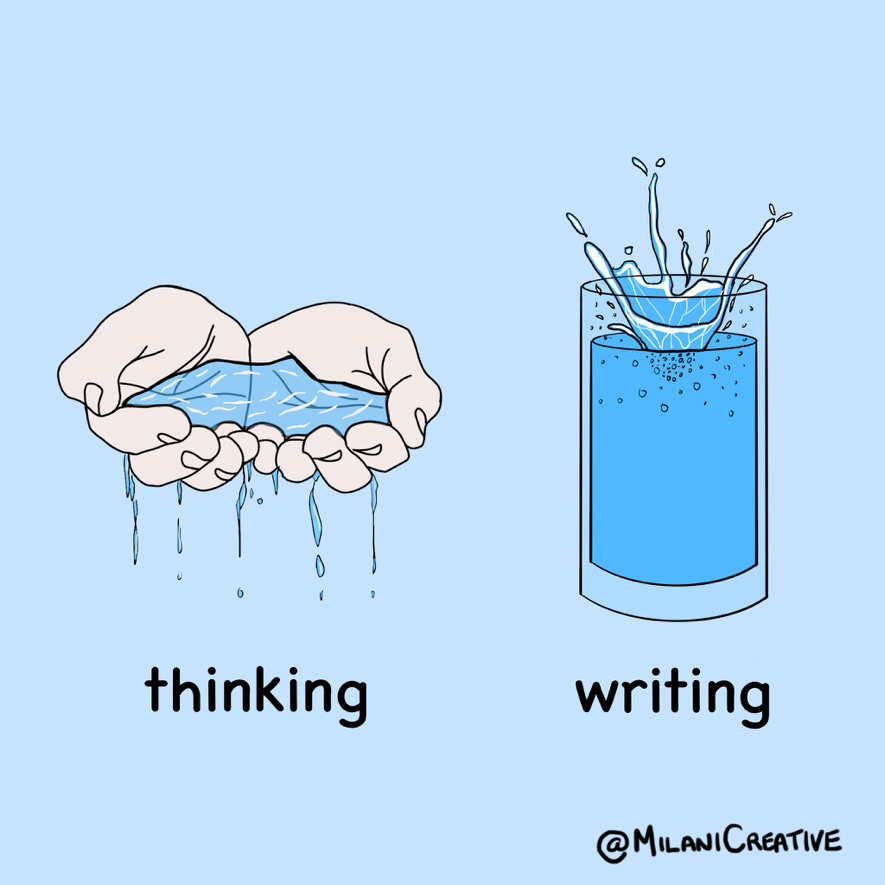
I started this Substack soon after starting Sendfull, and except for winter holidays, have been publishing an article weekly. My topics are inspired by learnings from my work and teaching, as well as tech news. Writing has become an important practice to sharpen and clarify my thinking. I’ve used this venue to prepare for panel discussions, explore my complicated feelings about design thinking, and develop early thoughts that would later become my Problem-Solution Symbiosis Framework.
At the start of every week, I stare down a blank page and somehow, by midweek, I’ve wrangled my thoughts into something coherent enough that I feel comfortable publicly sharing. It can feel like a pain to start, but I’ve taken to saying “the newsletter provides”. Within hours of publishing, I find myself pointing to my writing to concretely illustrate my point of view on a given topic. My writing has also led to amazing professional connections, with folks reaching out to me because of something of mine they’ve read. These connections have resulted in running collaborative case studies and getting invited to speaking opportunities.
How to get started? Write something, on a schedule. Maybe it’s once a week, or once a day. It doesn’t have to be long. Set a Pomodoro timer. Brain-dump a manageable number of words - try 100 to start, then edit. It can be about something you found interesting that week, or something that surprised you. Hold yourself accountable to this cadence, such as through publishing on a platform or sharing with a friend or colleague. Habits will start to form.
5. Cross-Pollinate Across Career Stages and Industries

Running Sendfull, teaching and start-up mentoring provides unique opportunities to engage with people across a multitude of industries, roles, and career stages. These interactions spark new insights, challenge my perspectives, and foster meaningful partnerships.
For example, teaching and mentoring early-career UX professionals has refined my ability to clearly articulate foundational design concepts, such as framing and reframing. Comparing notes between theory and practice enables me to evaluate classic design frameworks against real-world processes used to build emerging technologies like generative AI, and gain insight about how these frameworks need to evolve.
If you haven’t connected with people outside your product team or organization recently, make it a priority. Reach out to your university for mentorship opportunities. Find your own mentor. Contact people working on similar topics on LinkedIn to exchange ideas. These conversations can offer new ways of thinking and unlock unexpected opportunities for growth.
Wrapping Up
To recap, here are my five key takeaways from 2024:
AI Needs a New Design Playbook
Systems Thinking is Non-Negotiable
Go Hands-on to Build AI Intuition
Write Something, Regularly
Cross-Pollinate Across Career Stages and Industries
Thanks for reading! I’ll be back in mid-January to explore key themes to watch for in 2025. In the meantime, wishing you a restful holiday and an inspiring start to the new year.
Human-Computer Interaction News
The State of UX in 2025: A poignant love letter about change in the field of UX, covering how AI, market shifts, and evolving roles are reshaping design.
AR Insider’s 2025 Predictions: AR Insider unveils its 2025 predictions for AR/VR, highlighting trends like the convergence of AR and AI, the diversification of XR form factors, and Meta Orion’s impact on seethrough AR.
A16z’s Big Ideas for Tech in 2025: Ben Lang summarized the Andreessen Horowitz list of requests for startups to build.
Designing emerging technology products? Sendfull can help you find product-market fit. Reach out at hello@sendfull.com
That’s a wrap 🌯 . More human-computer interaction news from Sendfull next week.