

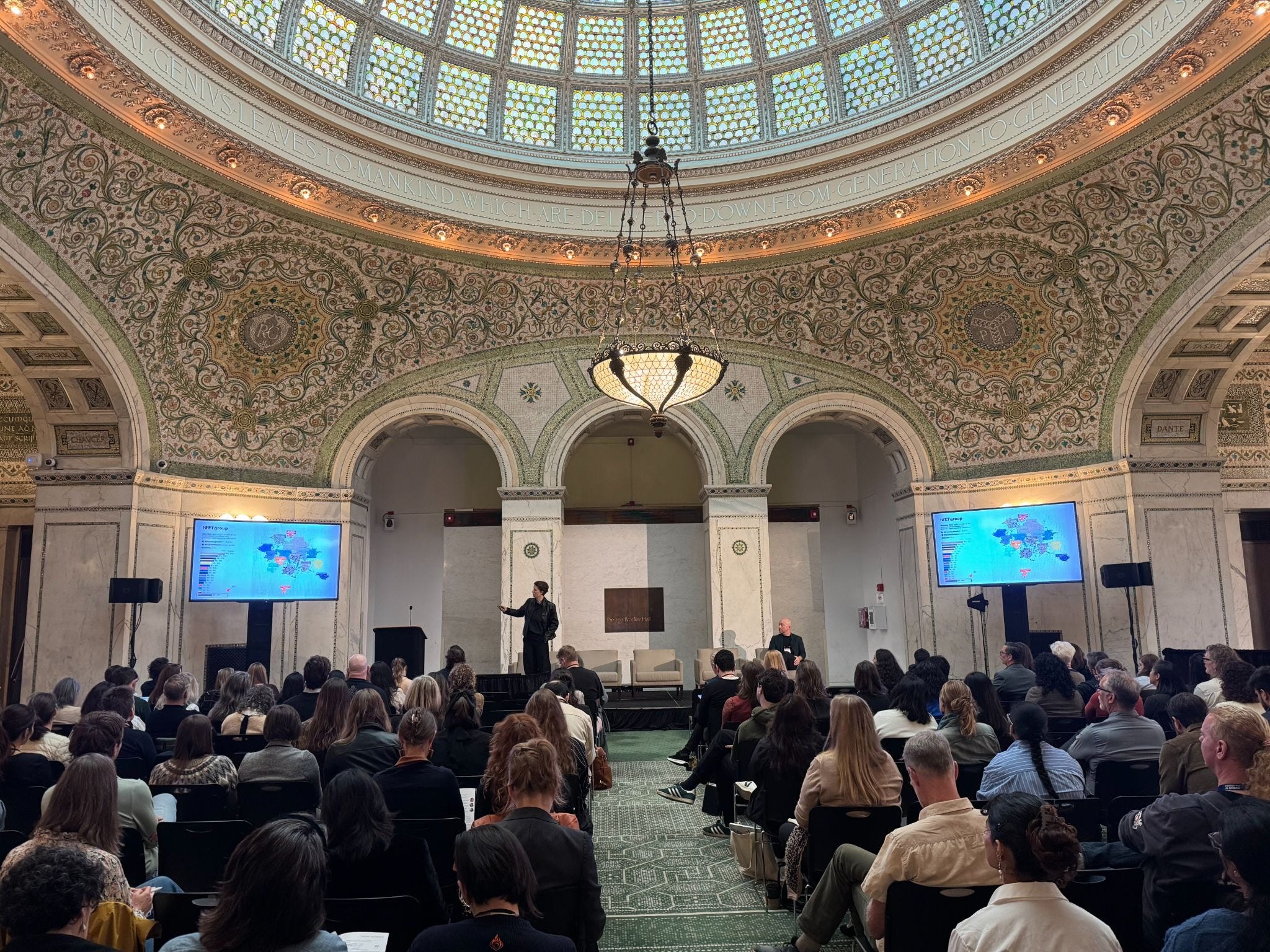
I’m writing this episode less than 24 hours after returning from EPIC People, the premiere international conference on ethnography in business and organizations.
ethnography: the qualitative study of human cultures and social systems in their natural environments to build holistic understanding. In an applied context (see: EPIC), it adapts these methods to translate real-world human behaviors into strategic value for product innovation and customer experience.
This year, the theme was context—specifically, modeling, predicting, and interpreting context to create value for people and business.
The theme couldn’t be more timely.
As frontier AI models hit diminishing returns from scaling pre-training compute and data alone, the bottleneck to more accurate, coherent outputs shifts from building bigger models to equipping them with the right context and domain knowledge.
One way to do that is through context engineering: the set of strategies for curating and maintaining the optimal set of tokens (aka information) the model sees while it works, including everything beyond your prompt.
Context engineering matters because LLMs have a finite “attention budget”. They don’t maintain perfect recall as their input length grows—a phenomenon called context rot. Through context engineering, you manage and mitigate this performance degradation.
What happens when you introduce ethnographers, the ultimate masters of context (in the thick data sense), to the tools of big data? How might they translate their ‘models’ of context via context engineering to steer generative AI systems?
Context Engineering Meets Ethnography
These questions were central to shaping Building with Context: How to Translate Human-Centered Insights into Working Prototypes with Vibe Coding, the EPIC pre-conference learning day I co-chaired with Todd Palmer.
The day was designed to connect the ethnographer’s skillset and context engineering with a place-based challenge: the wicked problem of zoning inequity in Chicago.
🛠️ Forward deployed ethnographers? The premise of Building with Context was directly informed by something that happened earlier this year. In May, OpenAI and Anthropic launched forward deployed engineering ventures worth $5.5 Billion.
Forward deployed engineers embed within client organizations to learn about customer workflows, followed by implementing and testing solutions. The goal? Close the significant gap between AI capability and value.
I’ve written about how the job is primarily the ethnographer’s skillset, with some building. It follows that teaching ethnographers how to build with context could open possibilities as our roles are called to adapt (or you might even say, shift) in this ‘age of AI’.
To this end, we partnered with Metropolitan Planning Council (MPC), a 93-year-old independent, nonprofit, nonpartisan organization whose mission is “shaping a more equitable, sustainable and prosperous greater Chicago region”.
We started our day at the Chicago Cultural Center, with 25 ethnographers gathering qualitative data through interviews with the MPC team about zoning in Chicago, channeling learnings from the organization’s recent landmark Zoning and Land Use Assessment Report.
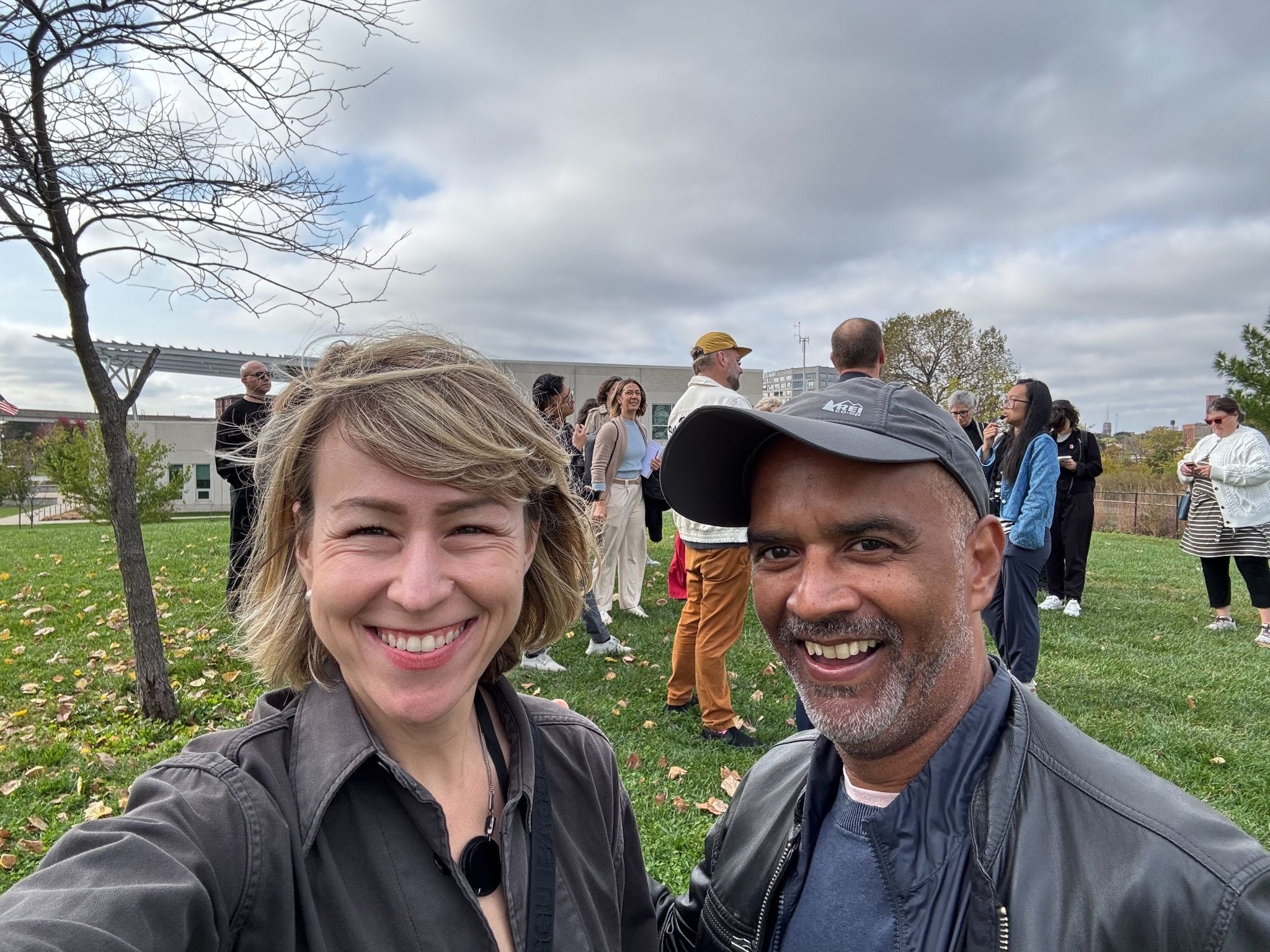
We then got out of the building for an MPC-guided site visit of Chinatown to overlook the development of “The 78”, a massive, 62-acre mixed-use real estate development on the South Loop riverfront in Chicago.
🏙️ Why The 78? The site served as a case study to illustrate the complexity of zoning inequity in Chicago.
tldr: The city designated about $1.1 Billion in Tax Increment Financing (TIF) subsidies to build transit infrastructure for “The 78,” a multi-billion-dollar megadevelopment. However, updated plans proposing a privately funded Chicago Fire FC soccer stadium rolled back those public transit projects, leaving around $76 Million in generated TIF funds non-transparent.
Critics argue the project bypasses community input and risks accelerating gentrification and displacement across adjacent working-class neighborhoods, including Chinatown.
So far, ethnographers were doing “classic” ethnographic research: subject matter expert qualitative interviews and in-situ observation.
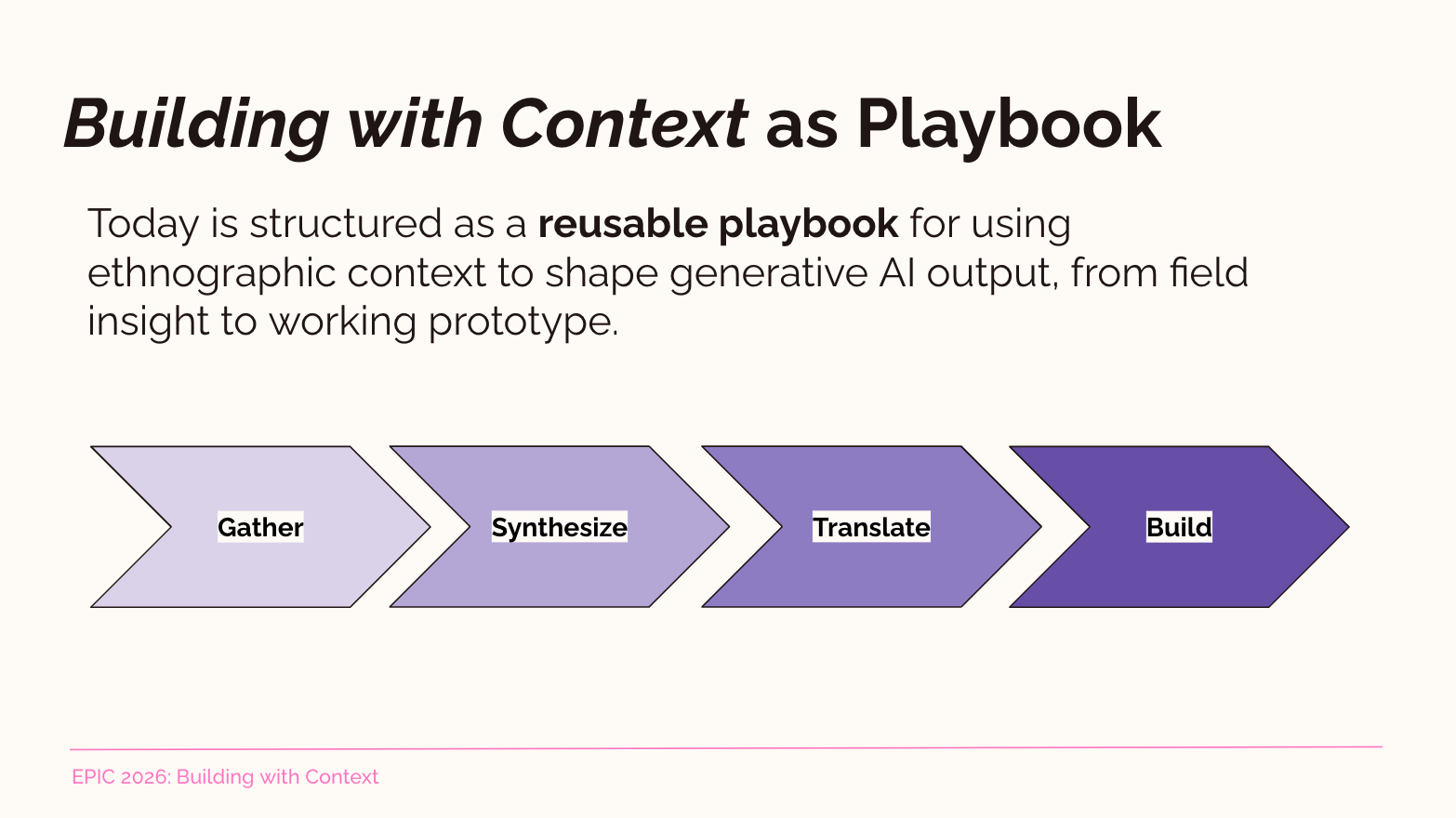
Now, enter the machines. And a framework.
Gather → Synthesize → Translate → Build
Up until this point, everyone had gathered qualitative context.
Data-gathering was further augmented by providing participants with a curated sandbox of secondary sources on Chicago zoning and The 78, both qualitative and quantitative (think zoning reports, maps, public hearing meeting minutes, and so on).
Participants then engaged in (human-led, AI-aided) analysis and synthesis to identify opportunities for interventions, such as making zoning decisions visible to holding decision-makers to account. By the end of the session, they would have working prototypes in service of those interventions.
Until now, participants were in familiar territory. Qualitative research and systemic design practice.
It was now time to translate qualitative context into machine-readable context through context engineering. I framed this approach through the analogy of a chef’s kitchen:
The pantry is your primary and secondary data sandbox.
The prep counter is your context window.
The order is your prompt.
Participants structured their knowledge bases and used Claude to create markdown files capturing system rules that would scaffold their vibe-coded prototypes.
We practiced asking Claude for help, refining the prototype prompt that we would paste into Lovable for the build.
At this point in the day, we were in full-on hackathon mode, with participants laser-focused on refining their prototypes in Lovable before our share-out.
Special shoutout to EPIC Prototypes & MVPs committee member and frontend architect Jeff Browning, who helped support participants during their vibe coding journeys, and to Lovable, for generously sharing credit top-ups so everyone could build without abandon.
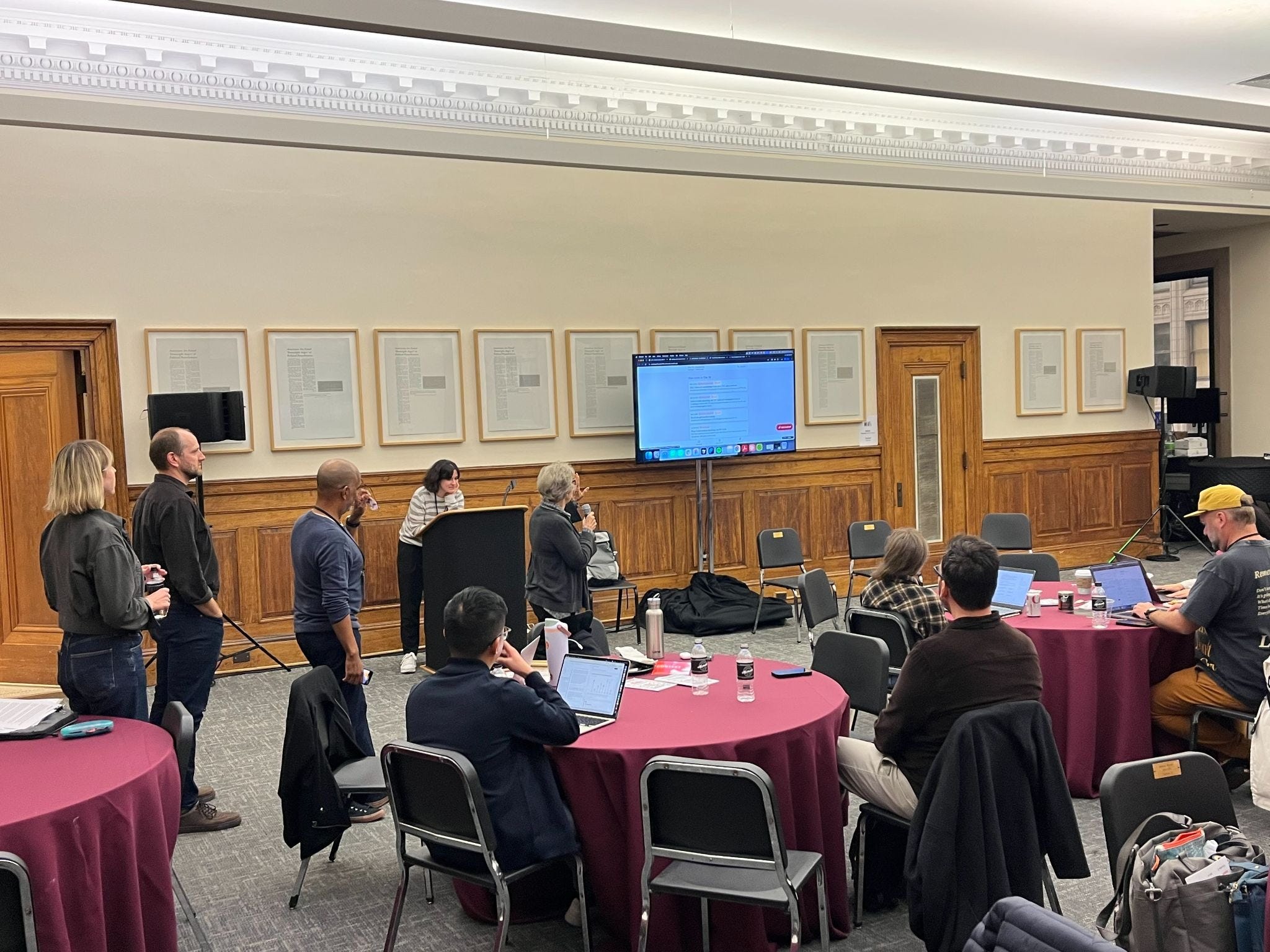
Here’s a (non-exhaustive!) sampler to demonstrate the range of interactive prototypes that participants built:
The 78 Neighbor Hub: A multilingual portal that updates local residents on The 78, routes their questions directly to decision-makers, and publicly tracks response accountability.
Community-centered vision framework: A strategic blueprint advocating for community equity in The 78 by redefining ownership, usage, governance, and purpose through a Chinatown-first lens.
Human-centered planning map: A spatial tool mapping governance networks and demographics at The 78 to ensure urban planners account for real residents rather than just real estate.
Power map and scenario simulator: An interactive simulation tool mapping stakeholder influence and modeling potential decision outcomes for regional development projects.
Weak signal tracker: An internal tool concept for organizations like MPC that monitors municipal policy signals and maps them against unaddressed Chinatown community concerns.
Now, we were clear from the start that (a) wicked problems, by definition, have no solutions, and (b) everything we were building was an exploration, in service of capacity building and investigating questions about translating ethnographic data into machine-readable signals.
That said, what Building with Context participants accomplished in a mere seven hours was phenomenal, going from zero to one in an incredibly complex problem space, while learning new tools and methods.
Context is All You Need
Bad pun alert in this header.
It was incredibly energizing to see a room full of ethnographers curate context and steer generative AI systems for social good.
It also reinforced, as one participant put it, that “you still need to know full context anyway to be able to steer AI effectively”.
As context and domain expertise shape the next wave of AI development, tech companies need to think about ethnographic skills not as a nice-to-have, but as foundational to machine learning innovation.
Some of the ways I personally want to see this manifest:
Ethnographers and machine learning engineers working side by side to build human-centered AI systems.
Ethnographers parlaying their skillsets into the extremely complementary domains of context engineering, eval-writing, and, if so inclined, vibe coding. Expand your job searches to “forward deployed” prefixes (and “solution engineer” while you’re at it).
Greater awareness in tech of how the ethnographic skillset can address current AI modeling and deployment limitations to drive customer and business value. May this humble episode serve this goal.
Massive acknowledgements are in order for everyone who made Building with Context possible: My co-chair, Todd Palmer; our phenomenal partner, MPC, especially Anne Dodge, Daniel Cooper, and Debbie Liu; our brilliant thought-partner and participants’ trusty vibe coding technical support, Jeff Browning; EPIC student volunteer, Caio Valporto, for helping the day run smoothly; Lovable, for offering additional credits for participants; the unwavering support from EPIC leadership, including Jennifer Collier Jennings, Maria Cury, Julia Rochlin, and Shaheen Amir; Rosenfeld Media for supporting my first book raffle; and, last but certainly not least, the 25 EPIC members for trusting, exploring, and building with us. Thank you.
All opinions in this episode are my own.
🚀 Sendfull in the Wild
What Your Machines Should Do: Pre-order Now
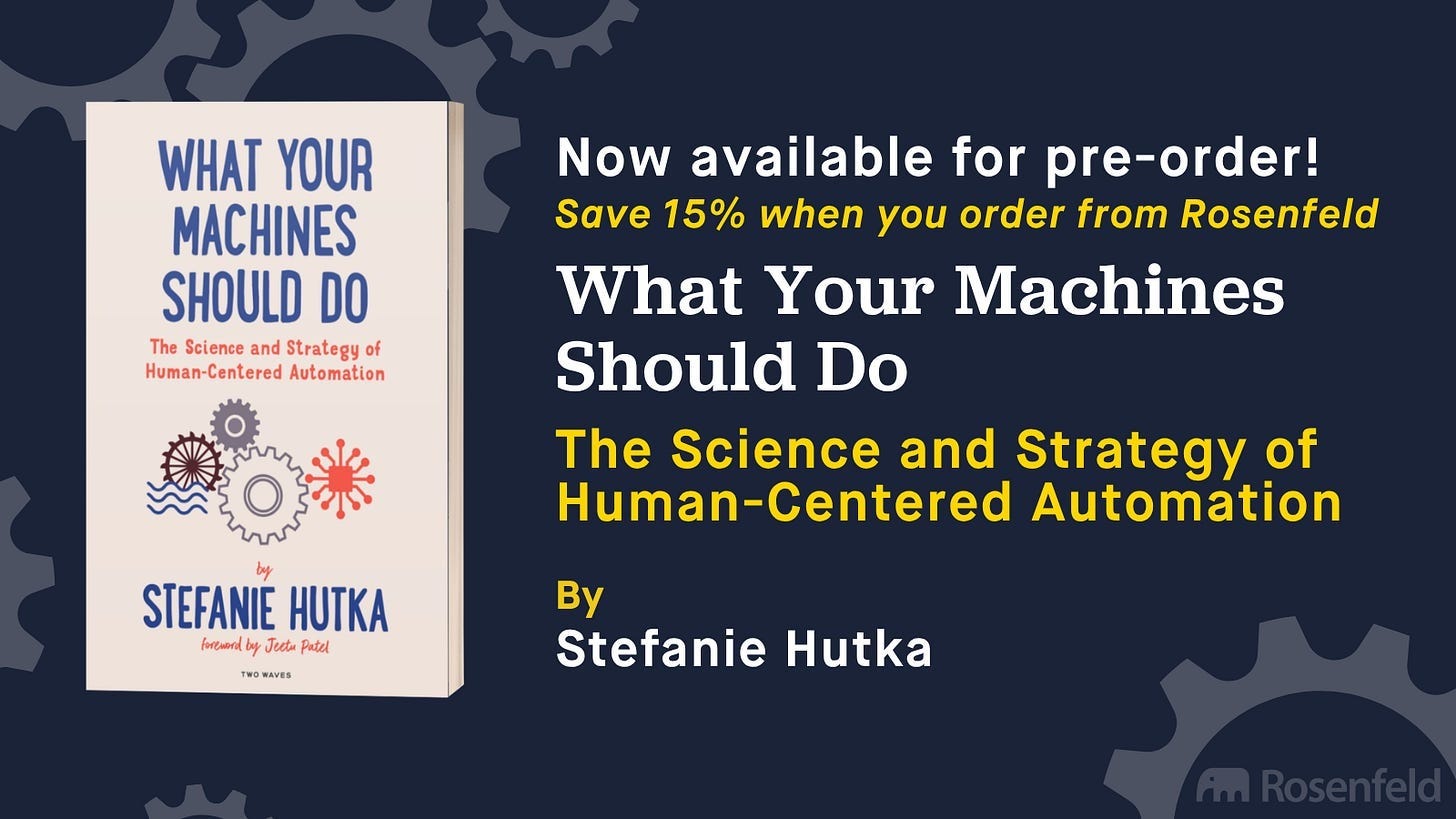
What Your Machines Should Do is a field guide for design and product decision-makers navigating AI automation, helping you steer technology to extend human capabilities and drive business results. That means closing the Automation Strategy Gap, where aspirations of fully automated futures become disconnected from organizational readiness and customer value.
You’ll gain frameworks and tools to set deliberate direction (where your organization is going and why), directed progression (how to sequence automation rollout to get there), and grounded tactics (day-to-day decisions about how to automate).
Upcoming Book Talks
UC Berkeley: Design Field Notes (Berkeley), November 3.
Rotman Business School (Toronto), November 25.
DesignMeets & OCAD U (Toronto), November 26.
Service Design Book Club, (Remote), December 2.
UC Berkeley: School of Information (Berkeley), December 2.
🎉 Pre-order What Your Machines Should Do today for 15% off.
⏪ Recent Episodes
ep. 104. Lean into the Liminal
ep. 103. Shift Work: A Curator’s Reflections on the Shift UX 2026 Conference
ep. 102. Shaping the Tools that Shape Us
🧠 Brainfood
That’s a wrap 🌯 . More on UX and automation from Sendfull in two weeks!
So cool! Thanks for writing up this experience, Stef.